The concept of expandable houses has garnered attention in recent years. These innovative structures offer flexibility and space efficiency. However, a critical question arises: are expandable houses suitable for cold climates? According to the U.S. Department of Energy, buildings in cold regions require superior insulation and energy efficiency. This is crucial for maintaining comfort and minimizing energy costs during harsh winters.
Research shows that traditional homes often struggle with heating in extreme conditions. For expandable houses, factors such as materials and design play vital roles. Many models use lightweight materials, which can be less effective in retaining heat. A study by the National Institute of Standards and Technology emphasizes that air leaks can significantly impact a home’s energy performance. This raises concerns about whether expandable homes can truly meet the demands of cold climates.
While expandable houses offer numerous advantages, they may not always be the ideal choice for colder regions. Owners must consider insulation and heating solutions carefully. Potential buyers should also think about the longevity and durability of these homes in challenging weather conditions. Adjustments may be necessary to ensure comfort and energy efficiency.
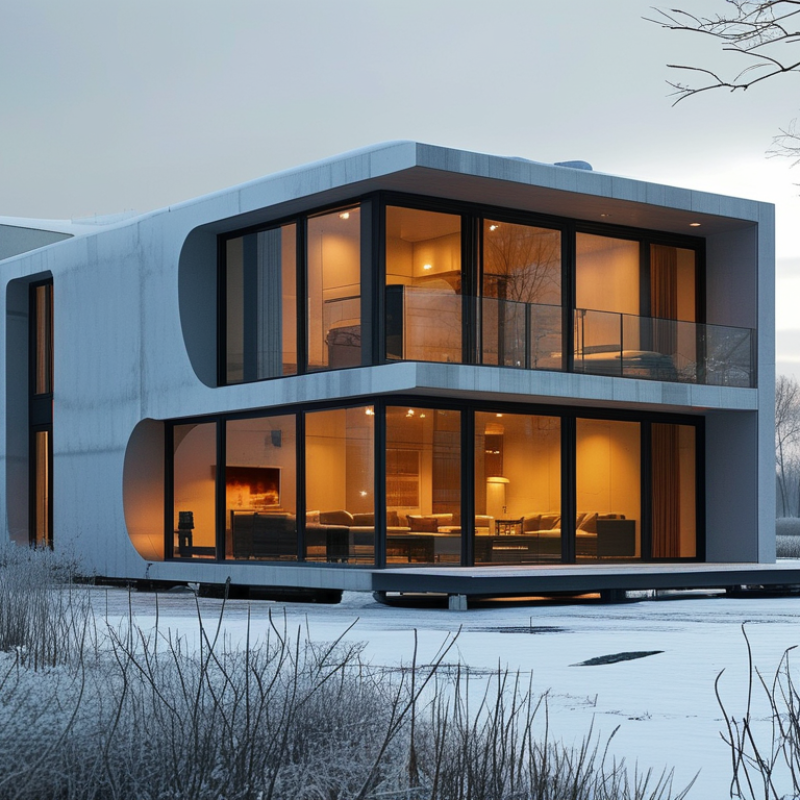
Expandable houses present a dynamic solution for modern living. They can be tailored to fit various environments, but their suitability in cold climates prompts important discussions. Research indicates that thermal insulation plays a critical role in ensuring comfort during freezing months. According to a report by the U.S. Department of Energy, homes lose up to 30% of their heat through air leaks. Proper sealing and insulation in expandable designs can significantly mitigate this issue.
One notable advantage of expandable houses is their adaptability. When temperatures drop, these structures can be expanded or reconfigured to maximize energy efficiency. A study from the National Renewable Energy Laboratory highlighted that homes designed with flexible space can reduce energy consumption by up to 15%. This adaptability, however, requires realistic planning and assessment. Not all designs naturally accommodate extreme weather, and some may necessitate additional insulation or heating sources for optimal performance.
Constructing an expandable home in cold regions also raises potential challenges. The materials used must withstand harsh conditions. Research points to wood and certain composites as effective, but not all materials perform equally well under stress. It's crucial to choose components that support longevity and resilience. Evaluating local climate data can guide decisions, ensuring that the expandable design can thrive even in the coldest months.
Expandable houses have gained attention for their innovative designs and adaptability. For cold climates, certain features enhance their suitability. Insulation is critical. Proper insulation materials, like cellulose or spray foam, can reduce heat loss. According to the U.S. Department of Energy, well-insulated structures can save up to 30% on energy bills.
Ventilation is another key aspect. With expandable houses, designing a reliable ventilation system is crucial. This keeps indoor air fresh without compromising warmth. Studies show that effective airflow management can improve indoor air quality by 20%. Additionally, consider using triple-glazed windows. They significantly reduce heat transfer and can improve comfort in freezing temperatures.
Tips: Always assess the local climate when designing an expandable house. An architect familiar with cold regions can provide tailored solutions. Reflect on the layout; spacing can influence heating efficiency. Explore renewable energy options like solar panels, which become increasingly efficient even in winter months.
| Feature | Description | Importance for Cold Climates |
|---|---|---|
| Insulation | High-quality insulation materials that reduce heat loss. | Crucial for maintaining warmth and reducing heating costs. |
| Heating Systems | Efficient heating systems, like radiant floor heating or heat pumps. | Essential for efficient and effective temperature control. |
| Window Design | Triple-glazed windows or specialized coatings to reduce heat loss. | Helps in minimizing heat escape and preventing condensation. |
| Air Sealing | Sealing cracks and openings to prevent cold air infiltration. | Important for maintaining a stable indoor climate. |
| Material Durability | Use of weather-resistant materials to withstand harsh conditions. | Enhances the lifespan and performance of the house in cold climates. |
| Roof Design | Sloped roofs to prevent snow accumulation and ice damming. | Reducing the risk of roof damage and increasing structural integrity. |
When considering expandable houses in cold climates, insulation techniques become crucial. A well-insulated home saves energy. Poor insulation can lead to discomfort and high heating costs. One effective method involves using spray foam insulation. This material expands on application, filling gaps quickly and efficiently. It helps create a tight seal against the cold.
Another option is reflective insulation. This technique includes radiant barriers that reflect heat back into the living space. It can significantly improve energy efficiency. Using multiple layers can boost this effect. However, ensuring correct installation is vital. Misalignment can lead to cold spots and wasted energy.
Exterior design also plays a role in insulation. Green roofs and thermal mass elements can help. They absorb heat during the day and release it at night. Yet, maintenance becomes a concern in harsh weather. Homeowners need to consider durability and repair needs as part of their planning. The balance between aesthetics and efficiency requires careful thought.
Expandable houses offer flexibility and innovation in living spaces. However, their suitability for cold climates involves several challenges. In such regions, insulation is key. Many expandable designs may not provide adequate thermal protection. This could lead to drafts and increased heating costs.
Another issue is the structural integrity of expandable houses during freezing weather. As temperatures drop, materials can contract. This contraction may lead to misalignments or cracks. Homeowners must consider the long-term durability of these structures. Regular maintenance and inspections are essential to identify problems early.
Moreover, the unique feature of expansion can pose complications. In cold weather, the mechanisms used to expand or retract may freeze or become less functional. Ensuring that these features work efficiently in winter conditions is crucial. Overall, while expandable houses can be a modern solution, their performance in cold weather requires careful consideration and planning.
In cold climates, expandable houses present unique challenges. A case study in Alaska showed that while these homes can adapt to size fluctuations, insulation remains a critical factor. The average energy consumption for heating in these areas can exceed 800 kWh per month during winter. In freezing conditions, improperly insulated expandables may lead to significant heat loss.
Another example is found in Sweden, where some expandable homes successfully managed thermal efficiency. One study reported that homes with advanced insulation techniques retained 90% of their heat. However, not all designs achieve this efficiency. Some owners faced issues with condensation, which can lead to structural problems over time. This highlights the importance of rigorous engineering and material choices in cold climates.
Despite the potential benefits of flexibility and space, the failure rates in harsh environments underscore a need for caution. Homeowners must consider local climate factors and invest in high-quality insulation. Without careful planning, the dream of an expandable house may quickly turn into an expensive burden. Understanding these case studies can help future projects in cold climates learn from past mistakes.
: Insulation reduces heat loss and can save up to 30% on energy bills. Proper materials are crucial.
A reliable ventilation system keeps indoor air fresh, improving air quality by up to 20%.
Triple-glazed windows significantly reduce heat transfer, enhancing warmth in freezing temperatures.
Assessing the local climate helps tailor designs. An architect familiar with cold regions is beneficial.
Insufficient insulation can lead to drafts and high heating costs. Structural integrity can also be compromised.
Expansion mechanisms may freeze or become less functional, impacting usability in winter conditions.
Some designs managed thermal efficiency well, but others faced condensation issues, highlighting engineering importance.
Regular maintenance is essential to identify structural problems early and ensure durability over time.
Poor insulation can result in significant heat loss, making them an expensive burden rather than a solution.
Consider local climate factors, invest in quality insulation, and learn from past case studies to mitigate risks.
The article "Are Expandable Houses Suitable for Cold Climates?" provides an insightful examination of how expandable houses can perform in colder environments. It begins with an overview of the unique advantages these homes offer, such as flexibility in space and efficient construction. Key features specifically designed for cold climates include robust insulation and weather-resistant materials, which are critical for maintaining comfort in harsh weather.
The article also details various insulation techniques that enhance the thermal efficiency of expandable houses. However, it acknowledges the challenges, including potential structural vulnerabilities in severe weather conditions. Through case studies, the article explores both success stories and failures of expandable houses in cold climates, ultimately addressing the question: are expandable houses suitable for cold climates? The findings suggest that while expandable houses can be adapted for cold regions, careful consideration of design and materials is essential for optimal performance.

Cencal Home